Dude! Take Your Turn!
A Gaming Life
Notable Books Read in 2024
Once again it’s been a great year for reading books, which is my other major passion besides gaming.
Last year I did a “5 Great Books Read in 2023” post, but this year I’m going to turn it on its head a slight bit.
I read a lot of really interesting books this year!
So I’m going to do more than five and divide them into History and Fiction (I didn’t really read much notable non-fiction that wasn’t History).
I did do another Goodreads Reading Challenge, once again setting my goal at 55.
And I made it with a 57-book read! (I’m currently reading something, but I don’t think I’ll finish it before New Year’s, so it will count towards next year’s Challenge).
Which actually brings me to a bit of a caveat, in that the first book I read in 2024 actually started in 2023! But it still took me until January 11 to finish it, so that was something.
Considering two of the books ended up taking up a total of 11 weeks, I was amazed that I was actually able to meet my goal.
History Books
Let’s start with the History books, and the most notable book that I read this year, mainly because it took me a whole seven weeks to finish it!

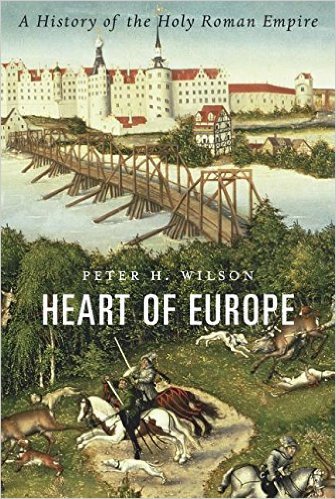
Heart of Europe, by Peter H. Wilson, is a monster of a book about the Holy Roman Empire that was published in 2016.
I started it on September 4 and finished it on October 18.
This is a massive tome, chiming in at 1008 pages (though I would say about 40% of that are notes and other things, like a much-needed glossary, but the notes are worth checking out).
It’s dense, it’s very detailed, and it wouldn’t surprise me if it takes you a long time too (though maybe not seven weeks).
However, it is so interesting!
The Holy Roman Empire was in existence in some form from Charlemagne’s time in 800 AD to 1806 when it was finally dissolved.
Heart of Europe details everything about it, but in a non-standard way that I found intriguing.
Instead of going chronologically, every chapter discusses a certain aspect of the Empire and then goes from the beginning of the Empire to the end.
The sections build on each other as well, tying related ideas into previous chapters.
There are four parts to the book: Ideal, Belonging, Governance, and Society, with each part having 3-4 chapters in it about a more specific subject within that overarching one.
Chapter 2, for instance, is all about Christendom and how Christianity fit in and was incorporated into the Empire. It is literally a history of religious practice in the various nations within the Empire.
Speaking of Nations, Chapter 6 is all about the nationalism of the various parts of the Empire, as the Empire was never a formal “I own and rule everything” Empire. It consisted of various nations and national identities within the heart of Europe. German nations, Austria, and others.
The Governance section talks about how this conglomerate of nations could actually be governed and held together into some semblance of a whole for 1000 years.
The chapter layout was very interesting, making it so you kept going back in time with each chapter, back to the beginning.
I am really glad that I read it and it is my most notable book in 2024 (mainly due to how long it took me).
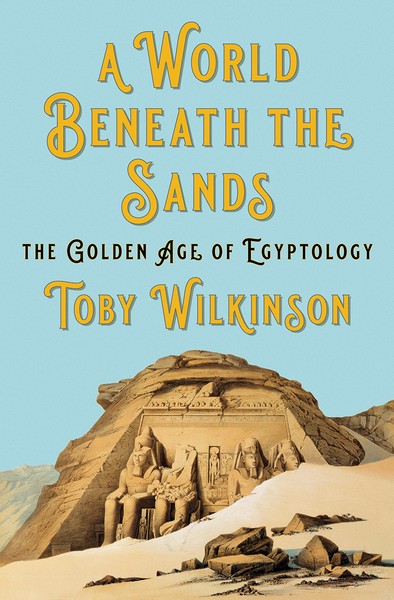
Another very notable book read in 2024 was Toby Wilkinson’s A World Beneath the Sands: the Golden Age of Egyptology, published in 2020.
Wilkinson is a well-known Egyptologist and I’ve read at least a couple of books by him.
This is not a history of Egypt, though.
It’s a history of Egyptology.
When hieroglyphics were first translated in 1822, it sparked a mad race between English, French, and German archeologists, as well as a world-wide public craze for all things Egyptian.
A World Beneath the Sands tells the stories of these archeologists and does address the colonial aspect of the whole thing, with either the British or the French taking control of these Egyptian ruins away from the native people. It tells how some Egyptian rulers tried to wrest this control away and maintain oversight of these priceless artifacts.
Mainly, though, it tells the stories of the intense expeditions to unearth as much ancient Egyptian history as possible as fast as possible, before other archeologists stole their thunder.
It’s written mostly chronologically, with famous figures in the realm of Egyptology being showcased, as well as the intersection when they met (or competed) for fame and glory.
And artifacts to take home, of course.
Wilkinson pulls no punches in describing how devastating some of these expeditions were to true history, wiping out a bunch of things that would actually add to our historical knowledge.
It’s a really fascinating book if you’re into that subject.
I would be remiss if I didn’t include another book that took me a month to read, but yet was full of fascinating information.

The Dawn of Everything: a New History of Humanity, by David Graeber and David Wengrow, was published in 2021 and purports to provide a “dramatically new understanding” of human history and societal evolution.
Unfortunately, Graeber died during the COVID pandemic in 2020, prior to the book being published.
However, it takes a new look at the histories of ancient peoples, how they evolved, and how civilization truly progressed, “upending everything we think we know about the origins and evolution of human societies” (to quote the Picador review that’s on the cover of the book).
In the past, ancient civilizations were seen as “primitive and child-like”, free and innocent people or extremely war-like, aggressively expanding as much as possible.
This book uses new research to totally turn all of that on its head.
Maybe most ancient cultures weren’t just hunter-gatherers, roaming the land and taking down animals for food, until civilization happened with the discovery of farming and such?
If they weren’t just hunter-gatherers, what were they doing?
There is a ton of information and analysis in this book (it weighs in at almost 700 pages) and it is all fascinating to read about.
As with most other books that “change what we always thought was true”, I don’t have enough knowledge in the area to determine how well-researched the book is, whether it’s a crock or whether everything they say is true.
Maybe there are other anthropologists out there who have noted a bunch of issues with the book?
Or maybe more and more are starting to come around to this way of thinking?
I just don’t know.
But I do know that it was all very interesting to read about.
Finally, let’s talk about Bismarck’s War: The Franco-Prussian War and the Making of Modern Europe.

This book was written by Rachel Chrastil and published in 2023.
It takes a look the Franco-Prussian War in 1870-71, talking about the causes of it and the outcomes that spread into the 20th century.
Chrastil’s thesis in the book is that the war was intentionally started by Bismarck in order to not only crush French power but also to force the creation of a new German Empire as well.
It details the battles themselves as German troops roll over the French, entering Paris in a matter of weeks.
But it also talks about the aftermath, both for Germany and the union of all the various German states into one great German nation, as well as yet another French revolution (or civil war, at any rate) with Louis Napoleon losing power and some French territories changing hands.
It was really interesting to see how Bismarck was able to engineer the war and the creation of the German state through military means and a national call to arms.
Among all of this, Chrastil manages to humanize the war by quoting from numerous primary sources, letters home from various soldiers, some wondering why they were doing what they were doing. Some were gung-ho to face the enemy but when that finally happened, disillusionment set in.
All of this is packed into 485 pages, and it was all very gripping.
Before moving on to fiction, let’s have three honourable mentions, because there were just too many interesting books read!
The Habsburg Empire: A New History by Peter M. Judson (2016) – a nice bookend with my Holy Roman Empire book earlier, this is a new history of the conglomeration of nations that made up the Austo-Hungarian Empire from 1700 to 1918. While World War I is definitely depicted, this is a history of the Empire itself so there is not a lot of military stuff in it. More how the war affected the Empire and hastened its dissolution. Not to mention everything before the war.
Pax: War and Peace in Rome’s Golden Age by Tom Holland (2023) – This book is the third in a series and talks about the expansion of the Roman Empire in ancient times. Conflict with other nations and “barbarian” tribes, and how the Romans looked at all of this. It picks up after the death of Emperor Nero and covers all of Flavian emperors and their expansion (and some retraction) of the Empire. A very good read.
Caesar: Life of a Colossus by Adrian Goldsworthy (2006) – Goldworthy is one of my favourite historians of the ancient world, but I hadn’t read this biography yet talking about Caesar’s life and the death of the Roman Republic. It not only talks about Caesar, but how the various political and military machinations going on at the time were affected by him. I love how Goldworthy is not shy in saying “we just don’t know what happened” even as he may say that one thing is more likely than another. I wish more historians writing popular history would do that.
Fiction
I read a lot of genre fiction in 2024, from Star Trek to Benjamin January mysteries (I think I will do a post about those one day), but there were a few notable books (or series) that I want to call your attention to.

The first is Dreaming Spies by Laurie R. King (2015).
The whole series is good and I’m slowly catching up.
The conceit behind this series is that the retired Sherlock Holmes meets a young girl named Mary Russell and ends up marrying her (it’s been so long since I’ve read the first couple of books that I don’t remember how she convinced him, but it does make sense). The series takes place in the 1920s (this one takes place in 1925) and has a whole bunch of intrigue and, yes, sleuthing in it.
Two-thirds of this book takes place on their Pacific journey that ends up in Japan where Holmes and Russell meet the Prince Regent Hirohito (yes, the man who will eventually become Emperor) and have to do a task for him.
The consequences of this reach all the way to England when they return home, with robbery and blackmail being a mainstay of the whole operation.
The series is amazing due to King’s writing style, blending the history of the 1920s with engaging characterizations. Russell is intelligent, but unlike the proverbial “Mary Sues” of the literary world, she is not portrayed as Holmes’ equal.
The partnership between these two is very well done and I found it hard to put the book down (nor could I the other three Mary Russell books I read in 2024).
Definitely worth checking out.
Prisoner of Midnight (2019) by Barbara Hambly is the eighth book in the James Asher series of vampire novels and it wraps up the series pretty well.

This series is about a British professor (and also ex-spy) named James Asher, married to a young doctor named Lydia, and their dealings with a 300-year old Spanish vampire named Don Ysidro.
While most of the series takes place prior to World War I, this book actually is during the war. Asher is doing more work for the British government in France while Ysidro and Lydia are on a ship to the United States. Ysidro is seemingly under the thrall of an American industrialist who wants a vampire to do his own bidding in breaking strikes, etc.
Unfortunately, it appears there’s another vampire on the ship that’s going on a killing spree. Lydia and Ysidro have to find out what’s going on, while Lydia seeks to free her friend, even if she has to kill him to do it.
This series is wonderful. Vampire fiction, some spy stuff as they travel to different countries and end up exploring the vampire societies anywhere from the Balkans to China.
The relationships are complicated because Lydia is somewhat under Ysidro’s thrall as well. She loves him, and yet she is also repulsed by him. Ysidro met them both when he had to enlist Asher to help find out who was killing the vampires of London (due to Asher’s ability to investigate during the day) and an uneasy friendship developed between the three of them, even as the humans know that Ysidro has to kill in order to live.
If you can find this series, it’s well worth reading.
Finally, there’s the Wild Cards series of anthology/novels that are always fun.
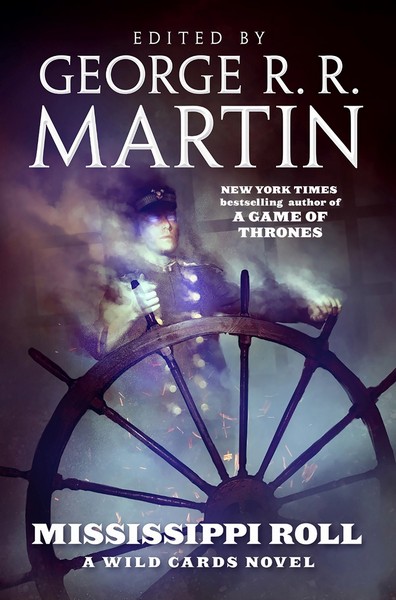
Mississippi Roll is an anthology that takes place on a Mississippi river boat, that’s about to be decommissioned but is making one last run up the river.
The Wild Cards universe is the result of an alien pathogen (dubbed the Wild Card virus by the public) that hit the Earth in the 1940s. Many people died, but many more were transformed in some way.
Some became mutated “Jokers”, deformed humans, usually with some kind of power, whether it be turning invisible or stretching or shooting electric bolts. Sometimes they’re just humans with fox ears or something, though.
Some became “Aces,” basically the same as Jokers without the deformity. Many of them became super heroes, trying to fight for truth, justice, and the American way (not really, but you get the idea).
These novels are actually anthologies with an overarching story but then including short stories from various authors that are linked to the main story in some way.
In Mississippi Roll, the captain of the steamship Natchez who was killed but somehow became a man of steam. He’s a ghost, but he can only become visible (and able to interact with the world) when he’s heated up by steam.
The Natchez (under new management of course) is making its final run before being decommissioned, but it’s also harboring a group of fugitive joker immigrants (timely!) that the government is looking for.
Along with this story, other Aces and Jokers are on the ship, and the book contains stories about them too, some including the captain or other characters introduced in other stories while others being completely separate (though still taking place on the ship).
That’s the beauty of this series, the interlocking nature of the stories even as they are told by different authors.
The Wild Card universe is really interesting and tales can be told throughout time from the 40s to the present day.
That’s why I actually read three of these books this year.
And more will be read next year!
They’re that good.
It’s probably a good time to stop now, but before I do, why not let me know what good stuff you read this year?
You can do that right in the comments below.
Here’s to another 55 books in 2025!
 Dude! Take Your Turn!
Looks like a good reading year! Our reading challenges were pretty similar – I set mine to 56 books, which is just the number I’ve read this year.
After I had seen you read it, I picked up Bismarck’s War as well…and was not disappointed. A good book on an often overlooked event! It made me understand the imperial German inclination toward offensive, timetable-based warfare (Schlieffen Plan) – after all, it had worked in 1870/71! Just that 1870/71 had set timetables to mobilization, not operations, and had been a near-run thing anyway (whose outcome had as much to do with egregious French mistakes as with anything the Germans did, as Chrastil points out).
Anyway, I enjoyed it! It might have made my own top 3 if there had not been other books I liked even more 🙂
LikeLiked by 1 person
Excellent! I’m glad that you liked it. I wish Goodreads posted to Bluesky. 🙂
That makes me very happy, and I’m glad you enjoyed this list too.
Are we friends on Goodreads? I forget.
LikeLike