Dude! Take Your Turn!
A Gaming Life
Notable Books Read in 2025
I love Goodreads as a way of tracking books read, though I am also really liking Storygraph as an alternative (since Goodreads is owned by Amazon, in case that matters to you).
Starting in 2025, I have been using both, but eventually I may just go to Storygraph. I try to limit my Amazon usage (though we are Prime members, so I know we’re not there yet) so I would love to use Storygraph exclusively.
One of these days, I’ll break this chain.
But not quite yet.
That being said, 2025 was a great year for books read.
My Goodreads reading challenge for 2025 was 55 books (I was conservative again) and I ended up reading 59!
I’m quite proud of that one.
This isn’t going to be a Top 5 or anything like that.
Instead, it’s going to be a list of books that I think you might enjoy, either from the non-fiction perspective or from the fiction one.
With that caveat, let’s begin!
First, I have to give a shout-out to Jonathan L. Howard.
I’ve been a fan of his since the first Johannes Cabal book, a few years ago.
His witty style of writing, bringing in both humour and the macabre, is just sublime.
I can read his books very quickly because they hook me so much.
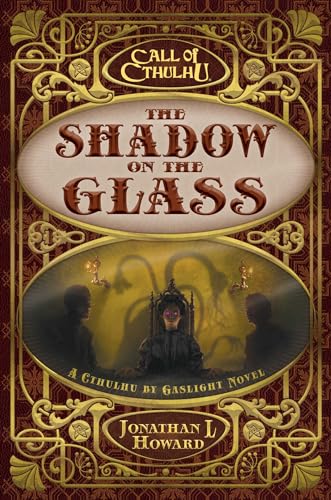
In 2025, I read his latest book, The Shadow on the Glass, a tie-in with Call of Cthulhu game system, but you don’t need to be familiar with the game at all.
A pair of spiritual swindlers (Elizabeth Whittle and William Grant) in Victorian England accidentally summon something horrific and they end up having to deal with it.
A detective is hot on their trail, trying to prove their fraud, so they decide to take one hustle to then be able to retire to another country.
However, the swindle ends up being on them as suddenly Lizzie isn’t herself. William becomes desperate to banish whatever it is that they’ve summoned, as well as trying to fight off a horrific arcane plot to destroy the world.
Howard’s humour and wit is unmatched and while this isn’t up to the level of his Cabal books, his prose is so gripping and I found myself laughing out loud at points.
You can’t go wrong with a Howard book.
I also read all three books in the Star Trek: Coda trilogy, that essentially ended the “novel-verse” and set up things for novels following all of the TV series.
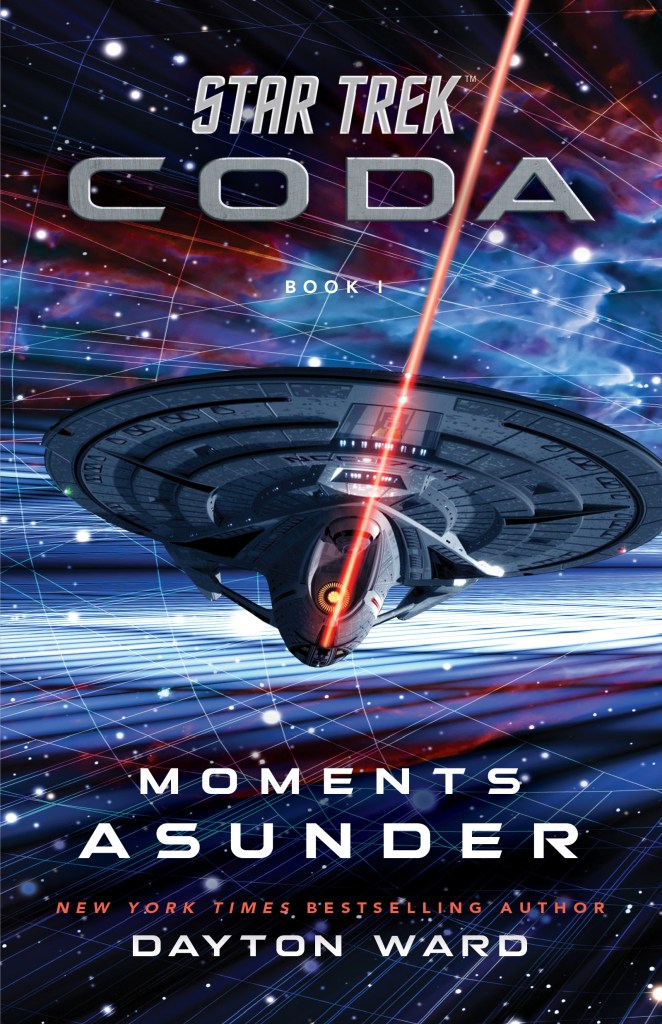
Moments Asunder begins with a galactic-wide (not to mention time-dimensional) menace that deals with the race of time-travellers from a relatively obscure Star Trek: The Next Generation episode.
Over three books, literally every Star Trek series, both television and book expansion, will get involved to try and stop this overall plot.
A bit of history for those of you who don’t follow this (though it will be brief because maybe you don’t care!).
When the TV series (all of them) ended, the novels picked up and expanded the plot after they ended. Deep Space 9 had a whole new crew of characters we knew and those who were invented for the series.
Voyager went back to explore the Delta Quadrant. Captain Picard and crew continued their adventures on the Enterprise-E, with Picard and Crusher marrying and having their own child.
However, when all of these new Star Trek TV series (Discovery, Picard, etc) started coming out and messing with the continuity the books had to try and maintain, it became untenable.
Thus, the Coda series essentially wraps everything up into a nice ball and leaves things open for the TV shows.
I have to say that while it’s notable, and if you followed most, if not all, of the book series, it’s an important trilogy.
But overall I didn’t really care for these.
To each their own, though.
They are notable!
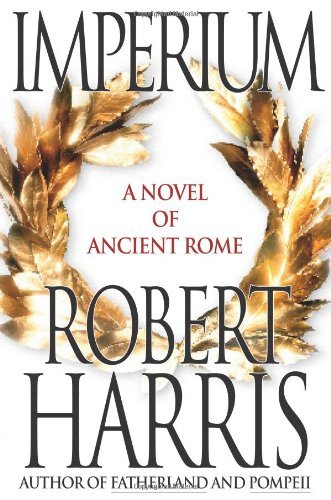
Imperium (Cicero: Book 1), by Robert Harris, might be of interest to people like my good friend Clio, because it’s historical fiction taking place in Ancient Rome.
Ostensibly, these books are the journals of Cicero’s scribe, Tiro (who is also a slave, though Cicero treats him almost like a member of the family).
In Imperium, Tiro opens the door to a stranger, a Sicilian who has been victimized by the corruption of the Roman governor, Verres.
He wants Cicero to represent him in a court case against Verres, opening the doors to a lot of Roman political intrigue and possibly helping Cicero rise to the highest level of Roman politics.
Even as he has to face off against intrigue from both other senators as well as Julius Caesar himself.
I love how this is supposedly a recreation of a manuscript lost in the Dark Ages and Harris really brings the characters to life.
I enjoyed this one immensely.
I’ve also been trying to catch up on the Harry Bosch universe books by Michael Connelly.
I started with Book 1, The Black Echo, and have managed to get through the first nine (not all Bosch books, some of them are just in the same “universe”).

It’s a bit jarring because these were written in the 1990s.
Cell phones are not that common. Instead they have to use pay phones and pagers.
The Internet is in its infancy, so it’s not the go-to research source when trying to find something.
I loved the TV show, which made these a bit more jarring because, of course, the TV show is updated to the 2010s, if not 2020s, at least.
But Connelly’s writing is so good that I raced through each of these.
Harry Bosch is an LAPD detective who bristles against authority, trying to make sure justice is done even if it doesn’t necessarily follow all of the legal rules.
In Black Echo, a murdered man found in a drain pipe turns out to be one of the “Tunnel Rats” who Bosch worked with in Vietnam, those men who went down into the tunnels and defied death.
Which brings back memories that he has to deal with as well as a current crime spree that may be just about to start.
I have more on my plate for 2026 (including one I just started but won’t finish in time for the new year, probably), and I can’t wait to read them.
Fans of The Expanse may be interested to know that the writing team of James. S.A. Corey (collaborators Daniel Abraham and Ty Franck) have a new series out called The Captive’s War.
I’ve read the first one, The Mercy of Gods, and it was very intriguing!
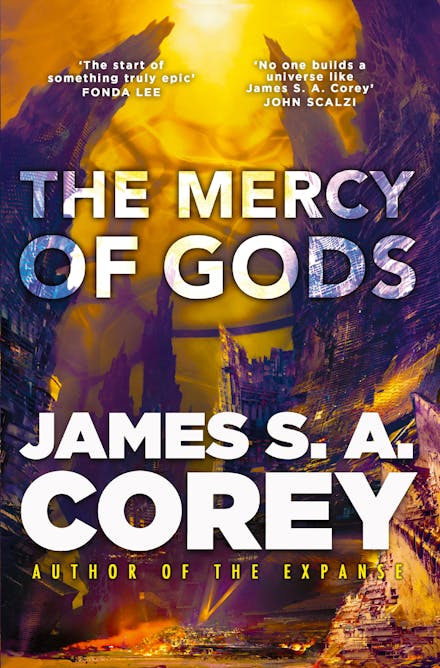
This one has the humans on the planet of Anjiin, being taken over by the slaver species called the Carryx.
Let’s blurb this to do it justice.
“Caught up in academic intrigue and affairs of the heart, Dafyd Alkhor is pleased just to be an assistant to a brilliant scientist and his celebrated research team. Then the Carryx ships descend, decimating the human population and taking the best and brightest of Anjiin society away to serve on the Carryx homeworld, and Dafyd is swept along with them. They are dropped in the middle of a struggle they barely understand, set in a competition against the other captive species with extinction as the price of failure.”
The premise of this one is really intriguing and I can’t wait to see where it goes next.
The second book is out but I haven’t found it yet.
It has the same great writing as The Expanse books, but the plot is nowhere close to those.
Well worth checking out.
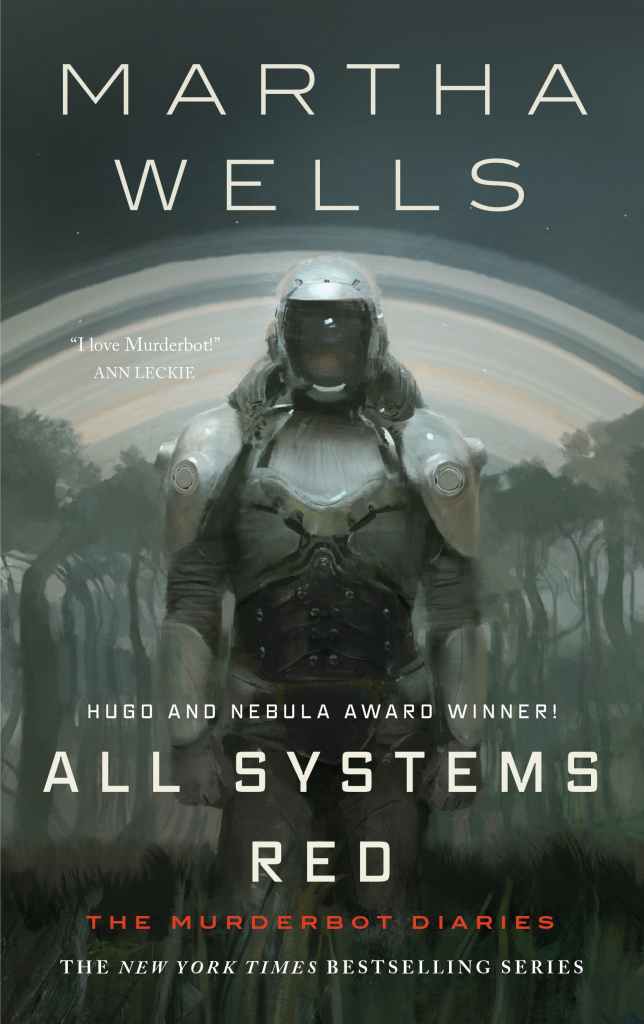
Finally, there’s All Systems Red, the first “Murderbot” novella from Martha Wells.
The TV show on Apple is wonderful and I highly recommend it.
The book is different enough that, even if you’ve watched the show, I recommend it as well.
In the Corporate future, explorations of unknown planets have to be approved by “the Company” and security is handled by one of their “Security Units” (often called “Sec Units”).
What the group that bought this unit doesn’t know is that it has hacked its own governor module so it’s self-aware.
All it wants to do is watch its space soap operas in peace, and it certainly does not want to interact with these annoying (and fragile) humans.
But when a neighboring mission on the planet goes dark, the humans and the sec unit must band together to figure out what’s going on.
I loved Wells’ characterization of both the humans the sec unit. The banter is great, the plot is interesting, and the sec unit’s personality must be seen to be believed.
It’s hilarious but also very touching.
Watch the show, but definitely read the book as well.
I don’t think I can hold off on the subsequent novellas until the new season(s) of the show come out, so I guess I’ll have to be spoiled.
So much for fiction.
How about some great non-fiction and historical books?

For you science geeks, the first non-fiction book I read in 2025 was Before the Big Bang: the Origin of the Universe and What Lies Beyond by Dr. Laura Mersini-Houghton.
This is a history of the universe and the study of its origins juxtaposed with Mersini-Houghton’s story from childhood (growing up in Communist Albania) to becoming a PhD with notable theories about the beginnings of the universe.
It’s fascinating to read and even to a science neophyte like me, it was gripping from beginning to end.
I think part of it was the personal touch, intermingling the scientific theories with her own origins, a female physicist in a male-dominated world.
Let’s blurb this because I don’t want to lose what really makes this book tick.
“Mersini-Houghton is no stranger to boundaries—or to pushing through them. As a child growing up in Communist Albania, she discovered a universe beyond her walled-off world through the study of math and science, and through music. As a female cosmologist in a male-dominated field, she transcended the limits that society and her profession tried to place on her. And as a trailblazing researcher, she helped to revolutionize the study of our universe by revealing that, far from living in a cosmic Albania, with a world that ends at its borders, we are part of a larger family of universes—a multiverse—that holds wonders we are only beginning to unlock. Mersini-Houghton’s groundbreaking research suggests that we sit in a quantum landscape whose peaks and valleys hide a multitude of other universes, and even hold the secret to the origins of existence itself. Recent evidence has revealed the signatures of such sibling universes in our own night sky, confirming Mersini-Houghton’s theoretical work and offering humbling evidence that our universe is just one member of an unending cosmic family.”
The only thing that darkens this for me a little bit is that she never responded to my email asking about the history of these cosmological theories and how they might have been used in Star Trek (the original series).
Believe me, it wasn’t a “frivolous” question from a Trek fanboy. I was really curious about how these theories were historically viewed in the 50s, 60s, and 70s, and how pop culture renditions of them (like in Star Trek) fit into everything.
Anyway, I’m sure she gets tons of emails and maybe this did seem frivolous to her.
It’s still a fascinating book.
I’m always a fan of Adrian Goldsworthy’s ancient history books, so I of course had to pick up Philip and Alexander: Kings and Conquerors.
This one is a complete history of the Macedons under King Philip and then his son, Alexander the Great, as they conquered territory throughout eastern Europe and western Asia.
It does seem to have a lot more to do with Philip than many biographies that center mostly on Alexander, which is also very interesting.
This is the first book I’ve really read on the Macdeonian campaigns through the Middle East, through what is now Afghanistan, Pakistan, and India.
It is so interesting because Goldsworthy keeps you interested.
Of course, being a thick history book, it did end up taking a month to read.
But it still is a must-read if you have any interest in this ancient history period.
Another hard history book to read, but yet still riveting even as I sometimes felt nauseated, was Russia: Revolution and Civil War 1917-1921 by Antony Beevor.
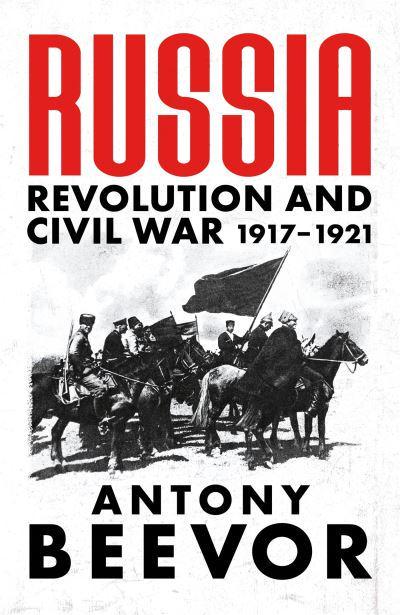
Beevor’s books always make me think and this is not an exception to that.
I’ve read about the revolution itself in 1917, but I haven’t really read anything about the civil war aftermath, from the fighting between White Russians and Reds, as well as the attempts to take over Poland, and the interventions from countries like the United Kingdom, Japan, and the United States.
The history is fascinating, but the Beevor does not spare the detail on the atrocities so it was kind of a hard read as well.
I’m glad I read it, though, and it’s a valuable book if you have any interest in this period.
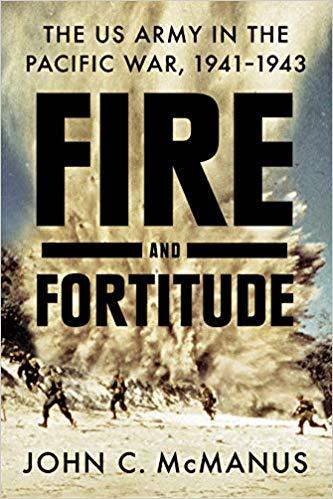
Fire and Fortitude, Book 1 of the Pacific War trilogy by John C. McManus was also definitely worth a read.
This is the story of the US Army in the Pacific theater in World War II.
It’s not the Marines, but the army, so some of the invasions that were Marine only are kind of glossed over.
Instead, there are long chapters about the Army, especially in 1941 as they were continually routed from various islands in the Pacific and especially the Philippines.
There is a lot about General Douglas MacArthur in here, but in a nice change of pace, the book is very even-handed.
There is certainly a lot of criticism, from his vanity and ego-driven statements to his relations with some of his underlings.
But McManus does a great job of highlighting MacArthur’s good qualities and he’s not afraid to say when MacArthur had something right as well.
The book is in-depth on both the American strategy side (including strained relations between some Marine officers and Army officers) as well as the Japanese side when records are available.
The research in this book (and the second one, which I just finished and may have to review at one point) is excellent and it’s a great book for those who want something from the Army’s perspective, rather than being Marine-dominated.
Finally, I have to mention The Illegals: Russia’s Most Audacious Spies and Their Century-Long Mission to Infiltrate the West (yeah, I won’t be typing that all out again).
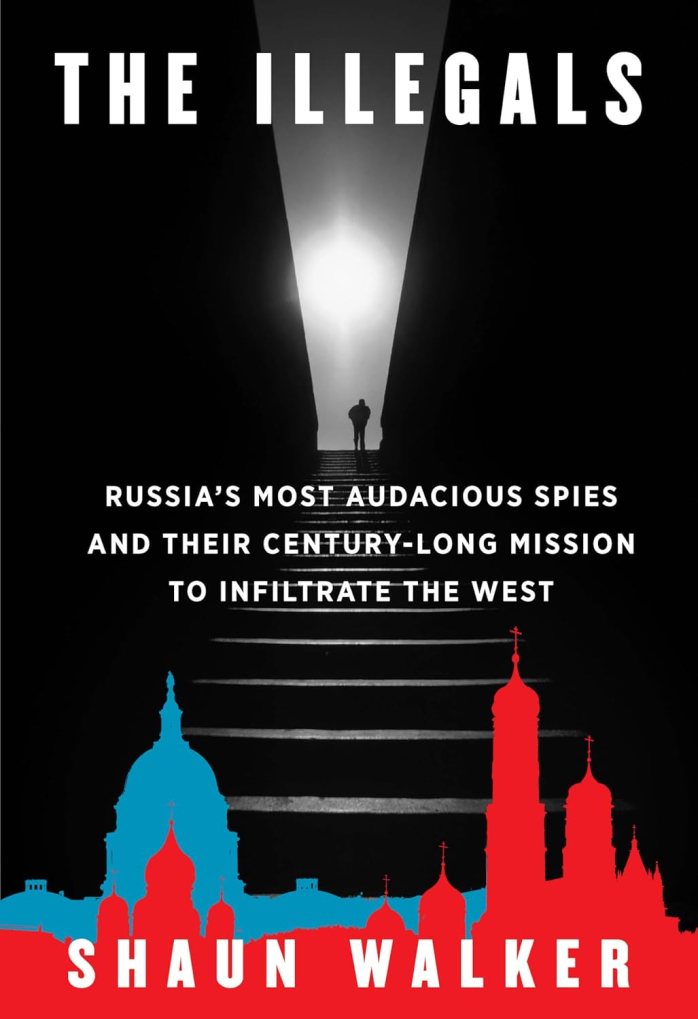
The book, by Shaun Walker, details the history of Soviet spies in the West, both Europe and the United States, but only the ones who were “embedded” in western society.
These were people trained to live in Western countries, take part in their societies, even as they were also spying for the Soviets.
Fans of the excellent show The Americans (a must-watch as it’s so good!) are familiar with the concept, but be ready for the fact that reality was mostly different.
I was sad that there was no mention of the TV show in the book, even just to acknowledge that it and the arrest of some sleeper Soviet agents in the early 2010s (which is kind of the impetus for the book, it seems) brought this saga to public consciousness.
However, the history in the book is wonderfully-written as it demonstrates how this spying program was generally a failure, or at least that it took more resources than the results would have been worth.
I really enjoyed this one.
Those are 10 great books that I highly recommend, but let me end by highlighting the ones I’m not mentioning here because I’ve already reviewed them.
The first review I wrote was for the Double Threat/Double Dose duology by F. Paul Wilson.
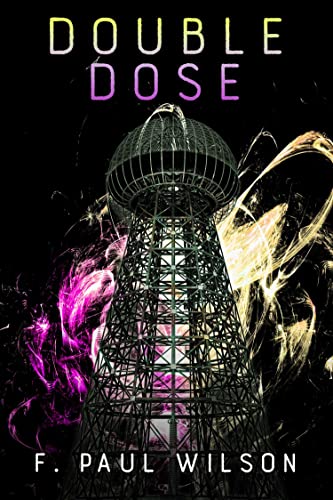

This two-book series takes place Wilson’s whole “Secret History” universe, but it seems radically different to me.
Mainly because while the Repairman Jack books do have some quips and humour in them, this is the first series of books which are downright funny.
I laughed a lot reading these two books.
Check out the review to see why.
The second review I wrote this year is for the second book in Rick Atkinson’s epic trilogy about the American Revolution.

The Fate of the Day takes up where The British Are Coming left off, detailing the war from 1777-1780.
Atkinson’s prose is so good, putting you in the heart of the war.
He even details a lot of the European side, from Benjamin Franklin trying to convince the French to join, to the French-British naval battles once they do join.
It’s such an excellent book, and I notice that my review has been getting a bunch of views lately, which is always appreciated.
Finally, there’s the hilarious When the Moon Hits Your Eye by John Scalzi.

One day, suddenly, the Moon has become made of cheese.
In a series of related vignettes that tie together beautifully, Scalzi tells the tale of how we humans deal with this, especially when a piece of it breaks off and begins heading for Earth.
Check out the review of this amazing book.
And that’s it for 2025!
Other notable books were read, of course, though a lot of it was genre fiction (mysteries, science fiction, Star Trek, etc).
I think I’m going to keep my 2026 Goodreads reading challenge set at 55 so we can see how far I can blow past it next year!
What have you been reading?
Any good books you recommend?
Let me know in the comments.
 Dude! Take Your Turn!
First of all, let me say that 59 is a beautiful number of books read in a year! I’m currently at 58, but given that I’m only one chapter short of finishing one of my current read, I guess I’ll make it to 59 in the last two days if 2025.
The Beevor and Goldsworthy books look very interesting, especially in shining light not only on the big thing everyone knows about (the Revolution, Alexander) but also in what came before or after (the Civil War, Philip).
I have read and very much enjoyed Harris’s Imperium! If you liked it, you’ll have fun with the other two books in the trilogy as well!
LikeLiked by 1 person
It’s kind of fitting that we’re equal! 🙂
I started a book that I know I won’t finish by Wednesday, so it will be the 1st book in my 2026 Reading Challenge. 🙂
Both Beevor and Goldsworthy books are amazing reads. Goldsworthy writes ancient history like nobody I’ve ever seen. My favourite is still How Rome Fell (I reviewed it on this blog a few years ago!).
I need to track down the other two Cicero books! But I will get to them. At least one in 2026 I’m sure.
Thanks for commenting and I hope the wait for Monday wasn’t too bad! 🙂
LikeLiked by 1 person
Always good to get a headstart on the next reading challenge! I had hoped to do that with my current read (because 58 is already ahead of my goal of 56 for 2025), but it went faster than expected, and I don’t see why to hold back 🙂
I’ll be aiming a bit higher next year – probably 58.
LikeLiked by 1 person
You have more courage than I do. LOL
I kind of manipulate things a little bit to make sure I hit mine. Get some novellas or some quick-read mysteries after a thick history book takes me a month to read. LOL
So higher than 55 scares me.
LikeLiked by 1 person
Books are books! Not every one of my 58/59 this year is a massive tome, either. There’s even a handful of very short children’s books in there as well which I’ve to my nephew, niece, and godson. Given that they will still be in prime age for that next year, I’m confident for my 58 🙂
LikeLiked by 1 person
Pingback: 5 on Friday 02/01/26 – No Rerolls