Dude! Take Your Turn!
A Gaming Life
New to Me – March 2025 – Part 2
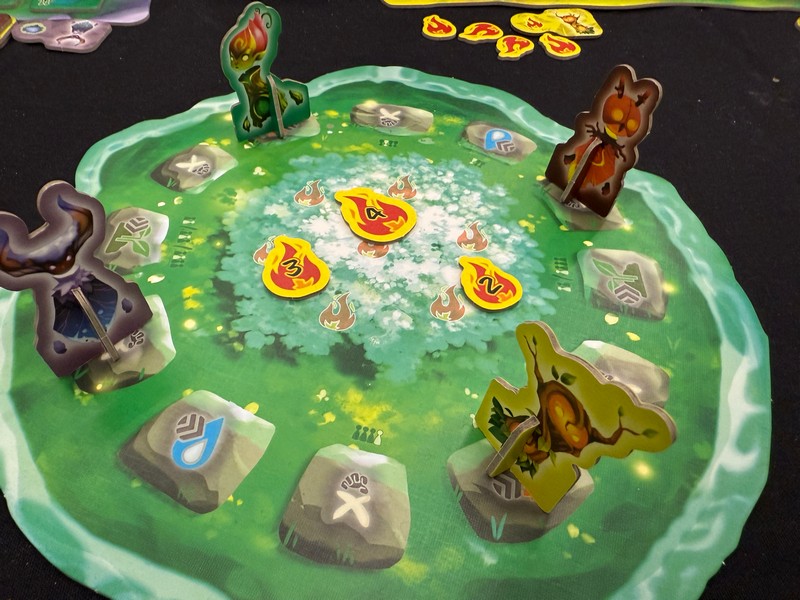
Wow, it has been a spell, hasn’t it?
With so many new to me games in March, I broke the usual monthly post into two posts, thinking I’d get them done a few days a part.

Yeah, I think I got into one of my funks again, feeling daunted by the sheer number of games I had to write about.
Imposter syndrome’s a bitch, ain’t it?
Anyway, finally two weeks later, here’s part 2 of the list.
Part 1 can be found here.
Thankfully (for blog-writing purposes anyway), April hasn’t been nearly as full of games, making next month’s post a lot easier.
Two of these games, I have an online streamer to blame for, because I wouldn’t have bought them without actually seeing them in play first.
My wallet really hates Edward right now.
But I love him!
Speaking of love and hate, the Cult of the New to Me wasn’t too unhappy with this second part of the list, with three games that are actually older than a couple of years.
That’s, like, almost half!
So, without further ado (all of my ado was lost when the train flipped over anyway), here’s part 2 of the March list.
Rajas of the Ganges: Cards & Karma (2024 – Huch!) – 1 play
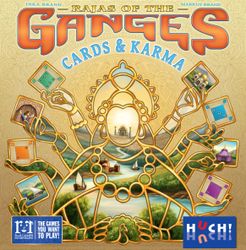
Designers: Inka Brand, Markus Brand
Artist: Dennis Lohausen
Players: 2-4
Rajas of the Ganges: Cards & Karma is another in the line of Rajas games, none of which (including the well-regarded original game) have I played.
This is the card game instead of the dice game, and it uses multi-use cards as both dice as well as buildings and other things you can add to your tableau.

Of course, you’re brilliant photographer/blogger neglected to take a picture of the other side of the card, that actually shows the dice value!
He has been sacked. Excuse me while I go find another.
Ok, back to the game!

On your turn, you’ll be drafting a card from the market for a variety of reasons: the die value (the front of the card shows you what colour the die on the back of the card is, but not the value), a building card (paying the corresponding die card from your hand, both colour and value), a ship card (discard a die card with the corresponding value on it), a goods card (just take the card), or a palace action card (discard a single card with the required value die on it).
Ships must be in ascending numerical order, so if you take a lower-numbered ship, you have to discard all of the ships you’ve previously taken.
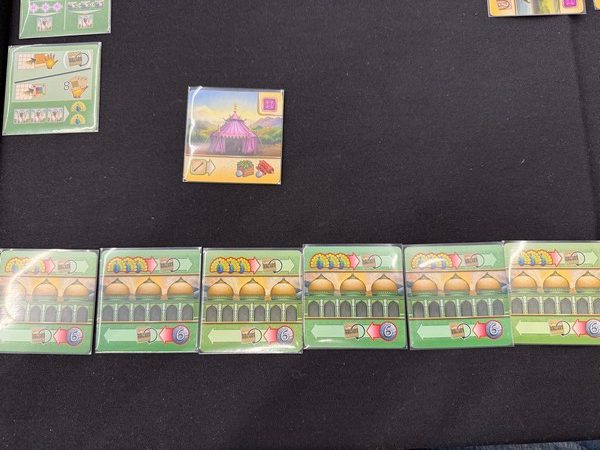
The object of the game is to flip over all the cards in your train. You flip the leftmost unflipped card by spending 3 fame tokens (something you must do).
Flip the rightmost train car by spending 6 coins.
As soon as somebody has flipped their 6th card, then the current round is completed and then whoever did it wins!
If more than one player did it, then you start doing tie-breakers and such.
This is a really quick game. Our play took 30 minutes.
It’s essentially a race game as you are collecting cards to eventually convert stuff into fame points or coins and then flip your train (flipping trains is bad usually!)
It’s a nice diversion and I did enjoy it, though it would not necessarily be my go-time lunchtime game.
Living Forest (2021 – Ludonaute) – 1 play
Designer: Aske Christiansen
Artist: Apolline Etienne
Players: 1-4
Living Forest is a push your luck game about building magical forests!
Players are nature spirits trying to save their forest from the flames of Onibi.
You do that by playing cards from your hand in a push your luck fashion very similar to Mystic Vale, turning over one card at a time until you decide to stop or until you bust by turning over your third bad symbol.
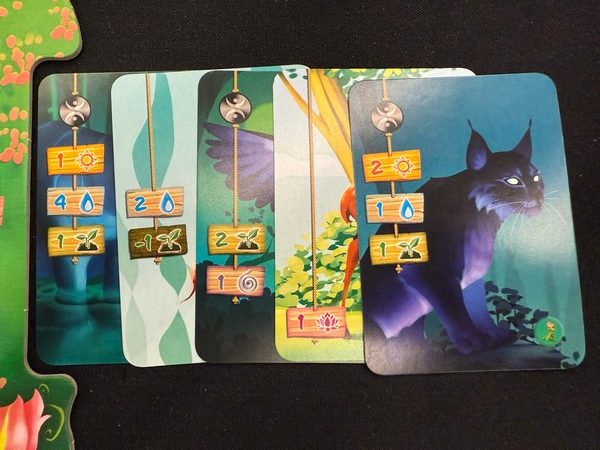
Each card will either give or take away resources, and/or may have a solitary symbol on it (or, if you’ve purchased one from the market, a gregarious symbol).
If you draw your third solitary symbol, you bust, but a gregarious symbol actually cancels out one of your solitary ones, allowing you to keep going.
You may have also collected fragments that can either remove Fire Varan cards that you have just drawn from your deck (Fire Varan cards are what you get when not all of the forest fires have been extinguished, more later) or allow you to discard a guardian card with a solitary symbol on it, as if you’d never drawn it.
After you’ve stopped, you can take two different actions. If you busted, though, you can only take one action.
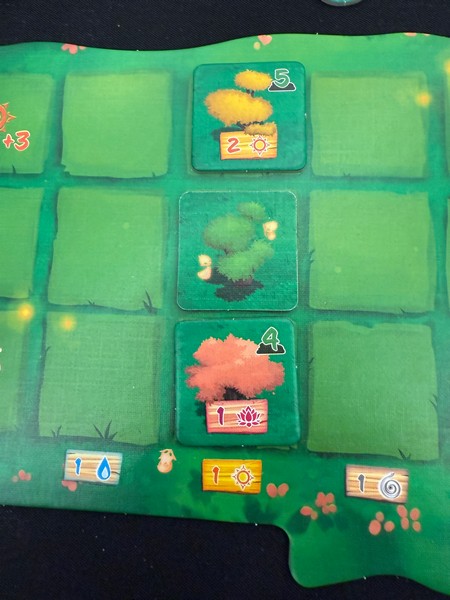
One of your actions can be to plant a new tree into your forest.
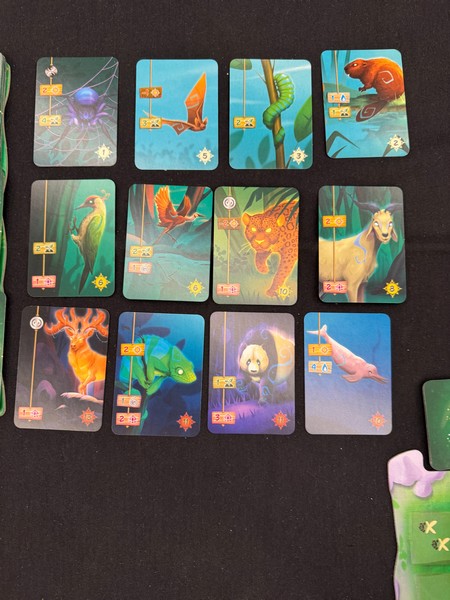
Or you can attract new guardian animals from the market into your deck.
You can simply take a fragment tile. Those can be useful!
You can also extinguish one or more of the fires that are waiting to hurt everybody, if you have enough water.
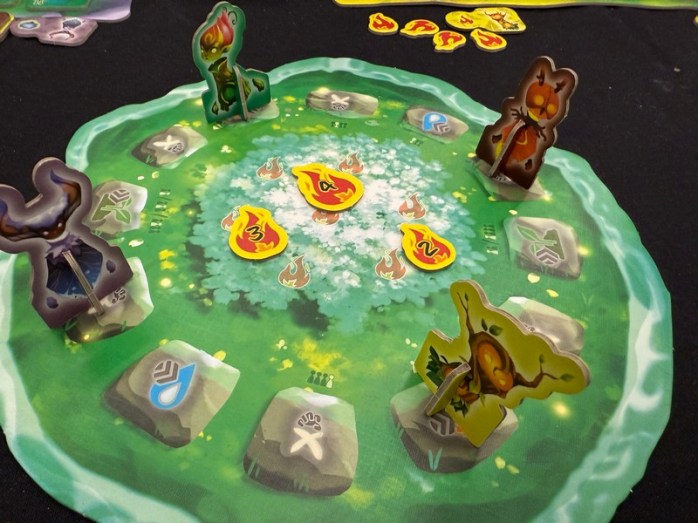
Fires that are remaining after everybody’s turn can hurt everybody, and extinguishing fires is one way of winning the game!
Play continues until one of the victory conditions has been reached at the end of a round.
First, a player could have 12 different trees in their forest, or extinguished 12 fires, or have 12 sacred flowers.
This is a game that, for me, outstayed its welcome a bit, though it’s not a bad game. Part of the problem may have been that it was the last game we played on Saturday night after a really long day.
I did enjoy it, and it does have that nice push your luck feel to it (without the annoyance of adding sleeves to cards!), but it definitely can have a “everybody pile on the leader” aspect to it if somebody is trying to win by fires extinguished.
Of course, somebody could be trying to win one of the other two ways, and could be sneaky!
I’d play it again, but it’s not one that I’m dying to play.
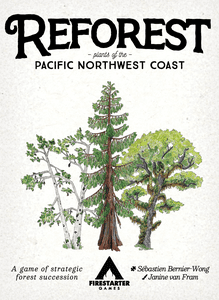
Reforest: Plants of the Pacific Northwest Coast (2023 – Firestarter Games) – 1 play
Designer: Sébastien Bernier-Wong
Artist: Janine van Fram
Players: 1-4
Reforest (forgive me, but I’m not typing that whole name out again) is a card game, kind of a tableau-building one where you’re putting together a pyramid (mountain) of cards to your forest.
Yes, another forest!
But this one with real trees.
It’s also a bit of an engine-building game, as some of the trees in your forest will have abilities (or point-scoring) for other trees that you play as well.
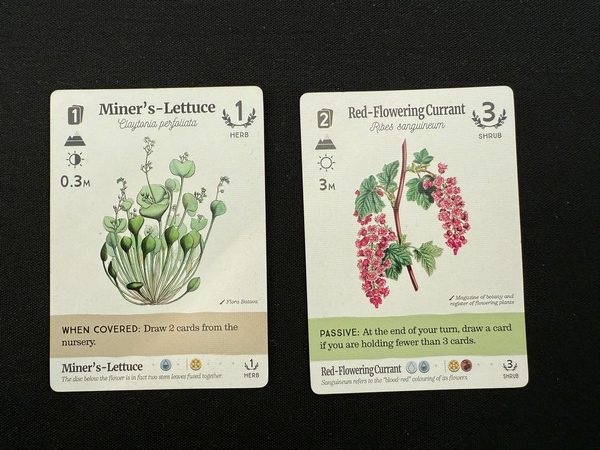
Players will have a hand of tree cards and will either “gather” plants (i.e. draw more cards) or play a plant to their forest.
If they play a plant, they can add it to their tableau, with some restrictions.
Each plant will say on the top left what elevation it can safely be played at.

There are three elevations in your tableau, with a base of 3 cards, a middle of 2 and then the peak of 1.
You can play a tree on top of another tree, as long as it’s bigger (the size is also in the top left).
The tree will also have a cost of how many cards you have to discard in order to play it.
Finally, the “sun” symbol will determine whether a plant that’s covered stays in play or becomes stored energy.
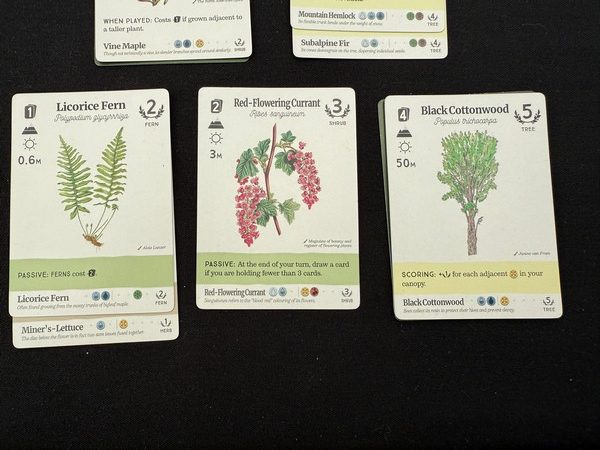
The bright sun means it becomes energy, but if it can live in the shade, then it stays face-up, just under the new tree. That means its points and icons still work.
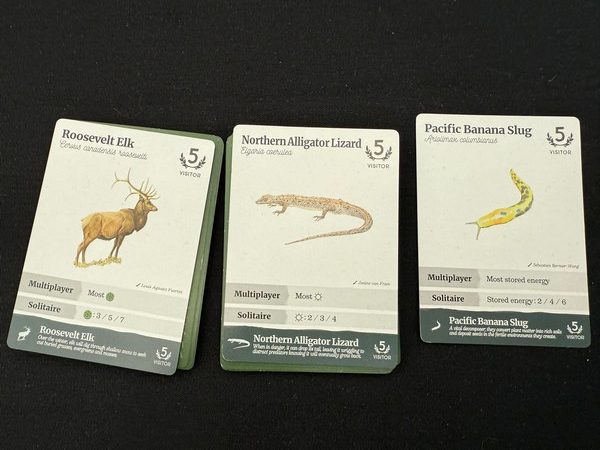
Each round, there will be a different visitor card that will give end of round points. The player who wins it will take the card and score it at the end of the game.
Also each round, a bunch of cards will get added to the deck, meaning it will get bigger each round.
At the end of three rounds, score up all of the forest stuff and see who wins!

This was a really fun, light engine builder that didn’t really outstay its welcome.
While it did take us an hour to play it, we were all learning it, so I think it would be a faster game otherwise.
It was fun!
CuBirds (2018 – Pandasaurus/Catch Up Games) – 1 play

Designer: Stefan Alexander
Artist: Kristiaan der Nederlanden
Players: 2-5
CuBirds is a very cute game that I had heard of but never seen.
Basically, it’s a game about getting a bunch of the same type of birds to sit together on a wire and shit on your car.
Um…maybe without the car part.
Or the shit.
(the description of the game says “fence” but I like my version better)

This is a card game where you are basically collecting sets of birds, trying to get sets of a certain size in order to win the game.

There will be a “market” of birds out on the table, and you will play a bird to the right or left of one row. The bird must be the same type as the bird at the other end of the row, and then you collect all of the birds between them.
It’s like they ate the other birds!
Or something.
These birds go into your hands and, if you have enough of them (equal to one of the numbers on the bird card), you can lay one (or two) out in front of you!
For the Flamingo above, if you had two in hand, you could place one of them out and discard the other one.
If you had three (the second number on the card), you could lay out two! And discard the other one.

What you are aiming for is to have either seven different species in front of you, or two species where you have three or more.
The round ends if somebody empties their hand, but since we didn’t actually do that before somebody won the game, I’m not sure exactly what happens at that point.
Read the rules?
What are you, my mom?
Anyway, it’s a very quick game (30 minutes in our play) and the artwork on the cards is very unique. It’s almost like computer art!
I’d definitely play it again. It would work great at a work lunch.
Tiny Epic Quest (2017 – Gamelyn Games) – 2 plays (kind of 3)
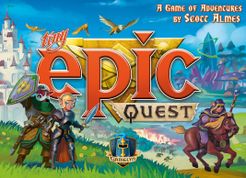
Designer: Scott Almes
Artists: Miguel Coimbra, Adam P. McIver
Players: 1-4
Tiny Epic Quest, however, doesn’t really work on a lunch.
At least not in our experience.
Boardgame Geek says otherwise, but I really doubt it, as we didn’t have that much analysis paralysis in taking our turns!
How BGG says 30-60 minutes, I have no clue.
After three plays, we still didn’t finish a game.
Anyway, what’s it about?
Players are factions wandering the realm, exploring temples, completing quests, researching spells, and trying to fight off the goblin invasion that is coming through the various portals that are sprinkled around the land.
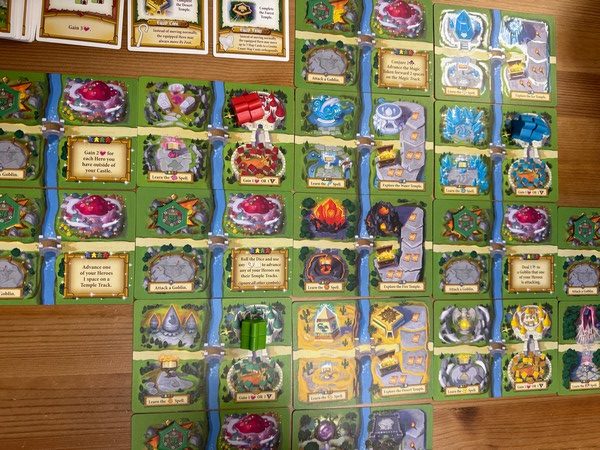
The map consists of randomized cards, though the players’ sanctuaries are always in the same place.
It’s just the other areas of the realm that are randomized.
On your turn, you choose one movement card and everybody can do that movement (in player order).
Each player has three adventurers that will be wandering the map, and you can move one of them using that card’s ability.

Maybe you can move one unlimited diagonally? Or maybe one space in any direction?
During the game, you’re trying to complete quests as well as explore the temples and defeat goblins.
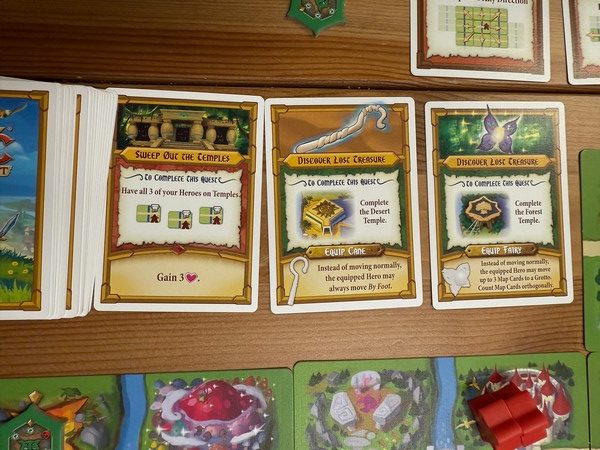
Once four of the five movement cards have been used, players go adventuring.

This is where you can take damage (from the nasty goblins), collect energy, add to the magic that’s blanketing the realm, and then maybe advance in the temples or damage the goblins that you’re trying to fight.
Players take turns rolling until all players have rested (or they are exhausted by losing all of their health).
If players complete temples, they may get extra bonuses, or maybe there was a quest for that temple.
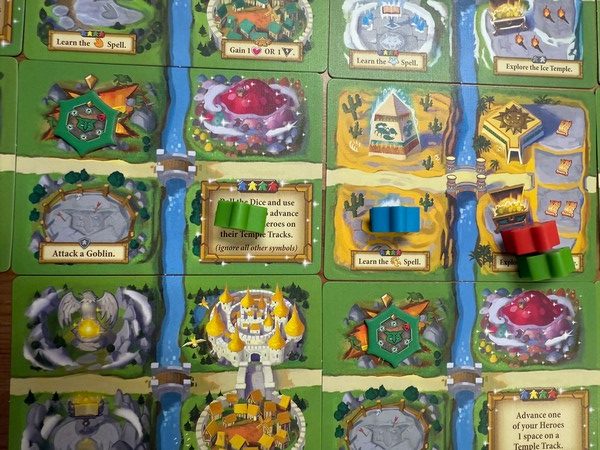
The game goes over 5 rounds, and then you total up the spells learned, quests completed, and goblins defeated, and whoever has the most points is the winner!
This could be a fun game if we aren’t under time pressure.
But there’s no way I can see that we can get it done in a lunch time.
I can’t really give it a fair assessment, other than to say that it’s not a game that I’m aching to play.
Would that change if we just let the game breathe and it takes as long as it takes?
Maybe.
Resafa (2024 – Delicious Games) – 1 play
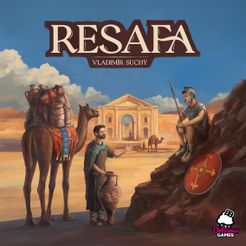
Designer: Vladimír Suchý
Artist: Michal Peichl
Players: 1-4
Resafa is the first of two games on this list that I blame Edward from Heavy Cardboard for.
If it wasn’t for his playthrough of this, making it look so cool, I wouldn’t have bought it!
And now I have a play of it in (two, actually, but the second was in April so doesn’t count for this list) and it is an amazing game of trading in the Middle East (not the Mediterranean, so Tom Vasel can play it without complaint)
Resafa is essentially a trading outpost in what is now Syria, and the area (at the time) was very dependent on collecting rainwater to actually allow people to live there.
Players are merchants who are moving from town to town, buying and selling goods. They’re also building canals to harness the flowing rainwater…for points! (I doubt that’s why they did it in real life, though).
Finally, it takes workshops and gardens to not only make where you live habitable, but also to produce some of the goods that will help you in all of these other endeavours.
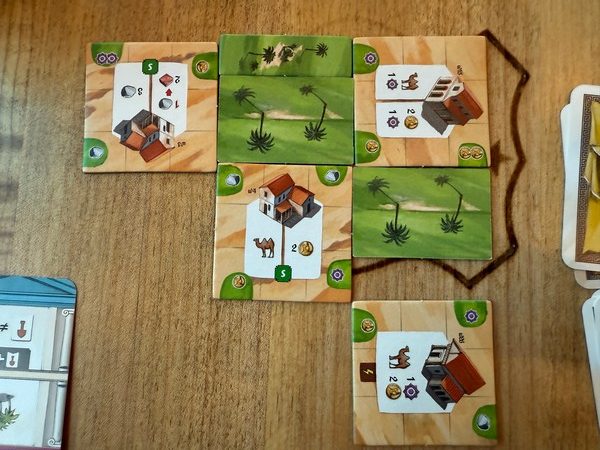
Workshop tiles are built in a rather interesting diagonal fashion, making room for the gardens that you will be placing between them (heaven forbid two workshops should be next to each other).
Placing workshop tiles, you can turn them however you wish, to enable the green garden bonuses to be triggered when you place a garden tile between them.
These bonuses could be resources, coins, or even points.
You’re also trying to build up your caravan to enable it to carry multiple goods (of only one type) and travel throughout the area to buy or sell stuff.
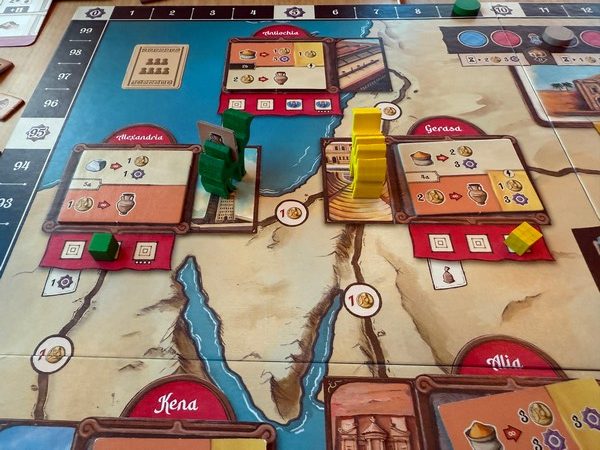
You can establish trading posts in each city as well, getting you more good stuff.
And then there are the canals that will have the water flowing.
The game takes place over 6 rounds, and after each two rounds, there will be a water phase where built canals are scored and, if they were built in the right place, rainwater will flow through them for even more points.

All of this is wrapped up in some clever action card selection mechanisms that I was really impressed by (it’s Suchy, so of course it’s clever).
Each turn, you’ll play an action card that will let you do one of two actions.
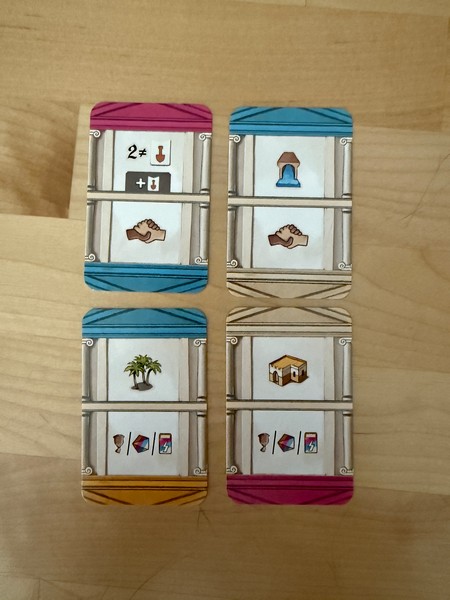
The colour on the end of the side you play also gives you a colour action.
That colour action will let you take a card of the same colour that’s out that round, or move up on that coloured track (which will eventually get you more bonus cards).
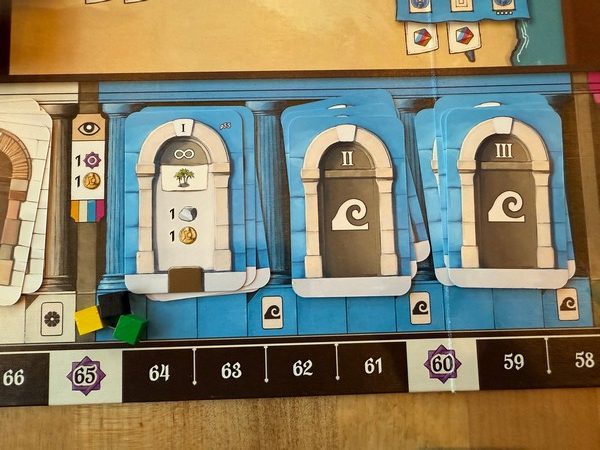
Thus, you’re always going to get two actions, and some of the cards that you can get might give you more actions as well. Or bonuses to actions.
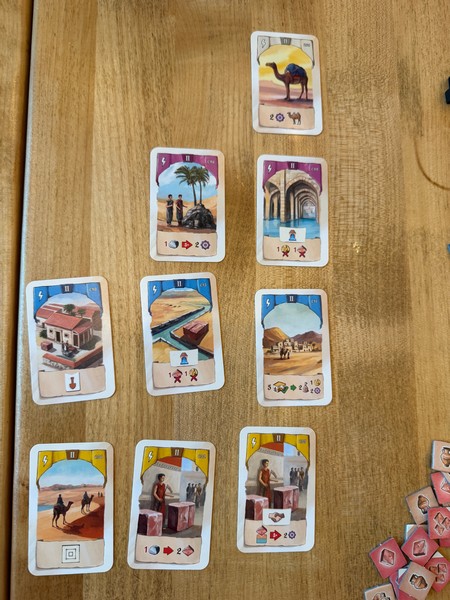
The game ends after 6 rounds and you total up the points.
More on how the game plays in my (most likely) review after I’ve played it a couple more times.
I really enjoyed this one. It’s intricate like most of Suchy’s other games and it just flows so easily.
The rulebook was a bit iffy as far as leaving a few too many things open to interpretation, but overall I really want to play this game again.
Seven Prophecies (2017 – New Mill Industries) – 2 plays

Designer: 折口 日向 (Hinata Origuchi)
Artists: Osamu Inoue (井上磨), Daniel Newman, Imogen Oh
Players: 3-4
The final new to me game of the month is a really interesting trick-taking game called Seven Prophecies.
The twist behind this trick-taking game is that you’re not just trying to gain tricks, but you’re strategically trying to win them.
Or lose them, but only in a certain way.
The reason for that is because at the beginning of the round, you have to predict how many tricks you will win, how many you will come in second, third and fourth.

In addition to that, the lead suit is never the same each trick!
Seven Prophecies doesn’t have a trump suit.
Instead, each round you will deal out a series of colour cards that will determine the must-lead suit each trick.

The lead player must lead with that suit. If you can’t follow suit, then you can play anything. Then the standings in the trick are ranked based on the required lead suit, then the highest non-lead suit and finally the lowest.
If you bet correctly that you would come in 1st/2nd/3rd/4th etc, then you place the cube that was on that bet out on the board.
There are ten tricks in a round, but as soon as somebody places all seven of their bet cubes out, the round is over!
Points are determined by on what trick the final cube was placed.
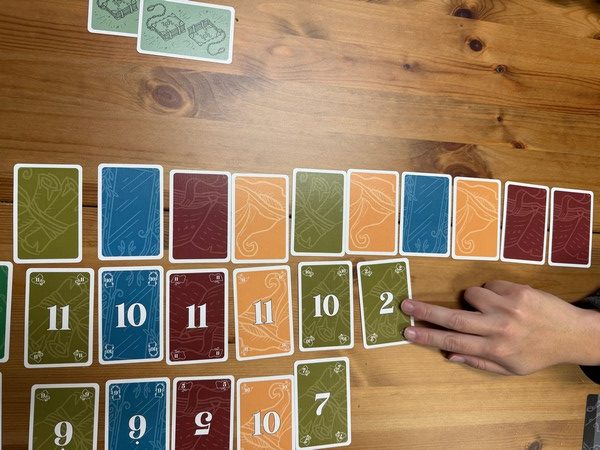
You lay out the played cards for each trick under the colour card to make things easier, and then reorder them to make things clear which position each player took.
As soon as somebody hits 7 points, they win!
Or you also play a number of rounds, and then just whoever has the highest score.
I really want to play this again.
New Mill Industries has been putting out a bunch of interesting-sounding card games, and this one was the one that really attracted my attention.
Of course that was after the Heavy Cardboard playthrough.
Curse you, Edward!
Finally, after all this time, that’s 14 new to me games played in March.
Any favourites in this list? Anything you have no interest in whatsoever?
Let me know in the comments.
 Dude! Take Your Turn!
I see you’re playing Rajas of the Ganges to prepare for Vijayanagara 🙂
LikeLiked by 1 person
Yes, that was it!
LikeLiked by 1 person